Parenting anxieties begin from the time our children are little.
How can I make my child like vegetables? How do I discipline my child? How do I teach my child right from wrong?
And, these worries get more complex as our kids age. What if they get into a relationship too early? What if they fall into bad company? What if they walk away from the faith?
As a parent of three children aged 6, 9, and 12, my anxieties have grown together with them. As I “graduate” to having no more preschoolers in the home, to having only primary schoolers and a soon-to-be teenager (gasp!), I am terrified at the challenges the future years will bring.
Throughout the years, I have often pondered this question: How do I teach my children to walk in the ways of God? And what can I practically do or say so they will choose what is right?
Instructing in Everyday, Ordinary Ways
As Christian parents, we’re already familiar with the charges in the Bible that we should teach our children God’s laws and ways: “Start children off on the way they should go, and even when they are old they will not turn from it.” (Proverbs 22:6)
Furthermore, we’re called to hide His words in our hearts (Psalm 119:11; Deuteronomy 6:6), and “impress” them on our children (v. 7)—talking about them whether sitting in the house, when we walk along the road, when we lie down, and when we get up. In our family life, for example, this could look like weaving in God’s Word when we’re together in the living room, on the way to school, before bedtime, or during breakfast.
Even mundane, everyday experiences can be used to illustrate God’s truth to our children— and they are precious moments that we can grasp.
In other words, we should let every moment of our day be an opportunity for instruction in the ways of the Lord. While I haven’t done this consistently or perfectly as a parent, one of the times I have tried to do this is when we’re on the road.

“Have you ever thought about what would happen if there were no traffic lights?” I asked my children when we stopped at a red light one day.
“The cars would crash?” replied one child.
“That’s right. Red lights and traffic rules are meant to keep us safe,” I explained. “God also gives us His commandments and rules in the Bible because He wants to keep us safe.”
Even mundane, everyday experiences can be used to illustrate God’s truth to our children— and they are precious moments that we can grasp.
Consequence As a Teacher (It’s a Good One!)
Sometimes, however, talking to our children about God’s ways isn’t always necessary. There are times staying silent may teach our children the value of following God too.
At a party, I watched curiously as a little boy climbed all over the sofa. His mother, a child psychologist, didn’t say a word. The boy threw the cushions aside, did a balancing walk on the sofa’s frame, then suddenly slipped. One foot got stuck between the slats of the bottom of the sofa, and he began to cry.
His mother pulled him out of his predicament, in a real-life example of best parenting practices that she had just shared: “Let children experience natural consequences.”
I have learnt that children learn best through experience and I don’t have to “save” my children from everything.
While I would have started scolding or yelling at my child to stop climbing around, I recognised the wisdom of my friend in letting children experience the consequences of their own folly—also known as “the school of hard knocks”.
Over the years as I’ve grown as a parent, I’ve learnt to react less and respond more—not yelling or expressing my emotions in a loud and angry way, but taking a deep breath and calmly addressing the issues at hand.
While I might have been harsher in the past or started warning my children before anything bad happened, I have learnt that children learn best through experience and I don’t have to “save” my children from everything.
Just last month, I watched my youngest ride his bicycle around the shallow pool. He navigated the pathways nimbly, testing to see how close he could get to the edge. Before I could verbalise a warning, the front wheel tipped towards the water, and the rest of the bicycle went down with it. My child fell all in and was drenched from top to toe.
He emerged from the pool dripping wet, face red with embarrassment. Stifling a laugh, I asked if he was alright before pulling his bike out. Needless to say, he won’t be cycling on the edge of the pool anymore.
But . . . What If?
Still, there are bigger dangers with more serious consequences that I have warned my children about, such as pornography and addictions. I have wondered to myself: What if they decide to forsake Christ and pursue a life apart from Him? What else can I do to stop them from turning away from God’s ways when they’re older?
Even as I have spent their younger years instructing them in His ways—by reading the Bible, praying with them, talking with them about Jesus, and bringing them to church—I know that each of my children has to make their own choice to follow Christ.
And while the natural consequences of rejecting Him and living in sin might teach them, would these be severe and irreparable?
Where Our Hope Lies
As I grapple with these anxiety-provoking questions, I found comfort in a surprising place—the book of Isaiah.
In it, the prophet warned of God’s judgment on Israel for their rebellion and idolatry, which would come in the form of their exile to Babylon. Despite their wickedness and hardheartedness, however, God also assured them that their shame and suffering would be temporary, while His covenantal love for them is everlasting.
Isaiah goes on to remind us of God’s promise: “All your children will be taught by the LORD, and great will be their peace.” (54:13)
While I may sow the seeds of faith in my children, God is the one who will bring fruit in their lives.
Jesus himself emphasised this point when He taught the crowds following Him: “It is written in the Prophets: ‘They will all be taught by God.’ Everyone who has heard the Father and learned from him comes to me.” (John 6:45; emphasis added)
While I may sow the seeds of faith in my children, God is the one who will bring fruit in their lives. He is their Good Shepherd who carries them from cradle to grave, and who promises to sustain and rescue them (Isaiah 46:4).
God himself is the pioneer and perfecter of my children’s faith—not me (Hebrews 12:2).
What Only God Can Do
As an expression of this faith in His Word, I pray as often as possible for my children, praying for their salvation and committing them to the Lord. I ask God to protect them from the evil one and their own sinful nature, and to transform them by renewing their minds so that they can learn His will for them—which is good, pleasing, and perfect (Romans 12:2).
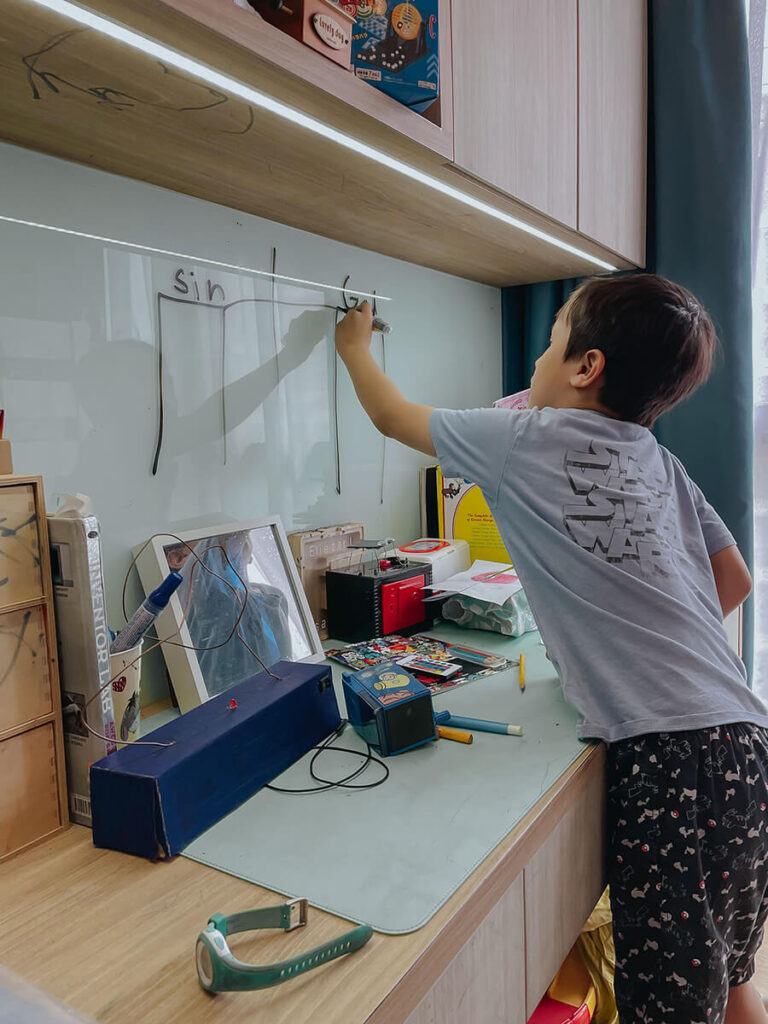
I’m humbled to see glimmers of faith in my children’s hearts. My youngest child often gathers the family together for “family worship”, my middle-born can explain that sin separates us from God and Jesus saves us from our sins, and my eldest has—on her own—led her younger brother in prayer at bedtime.
I cannot take credit for any of this. I can only pray as Paul did, that He who began a good work in my children will “carry it on to completion until the day of Christ Jesus” (Philippians 1:4–6).
If you’re reading this and wish you could do more to intentionally disciple your children, can I encourage you that it’s never too late, and that Christ is sufficient in your parenting? As we walk closely with the Lord, He will show us daily how to guide our little ones.
To all the anxious parents out there, let’s lay all our parenting fears, worries, and anxieties at the foot of the cross. We can experience the Lord’s peace as we place our hope in a faithful and all-powerful Saviour, who knows and loves our children more than we ever can.